Ane Miren Rotaeche Dowdall
4th Generation, Ana Aboitiz Ugarte branch, from her 2018 intervie
The start of World War 2 found my family living in Davao. My family consisted of my father Luis de Rotaeche Rotaeche, my mother Elisa Ugarte Aboitiz, my brother Jon Mikel and I, Ane Miren. At that time my father was working for Elizalde and Company and was General Manager in Davao.
In his dealings with clients at work, my dad noticed that there were an unusually large number of Japanese in the island and many of them worked as gardeners. He also saw that as time progressed, the comportment of these grew in arrogance. We later realized that this behavioral change was indicative of how their plans for war were evolving. We also realized that many of these Japanese, although seemingly holding gardener jobs, held key positions in the military and were placed in the Philippines for specific military reasons.
Life continued for us as it usually did until the bombing of Pearl Harbor and the first aerial visits of Japanese planes. It was then that certain steps needed to be taken in preparation for what would surely come our way. The first of these preparatory steps was the appointment of three men, men who were citizens of neutral countries, to take charge of their fellow citizens and others. One of these men was my dad who held a Spanish passport. He was in charge of the American civilians and the Spaniards if an evacuation was warranted. The much-dreaded day did present itself after a Japanese plane made its presence felt. We left in haste, under the darkness of night, with little more than what we wore and could carry in a small bag. There was always the hope of returning and the house was left intact with the household domestics and one police dog to guard them. My dad certainly planned on returning.
As we drove away and daylight approached, Japanese ships were seen steaming in the direction of Davao and we knew that this was not going to be a temporary venture. Definite evacuation plans needed to be mapped out, an evacuation venture that took us all the way to Cagayan de Oro in the north and six months to get there. Initial decisions consisted of whether to hide in virgin forests for the duration or continue toward the north and it was in the direction of the north that we went.
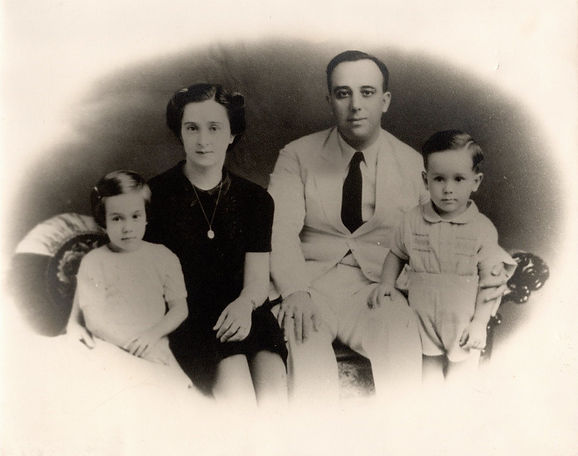
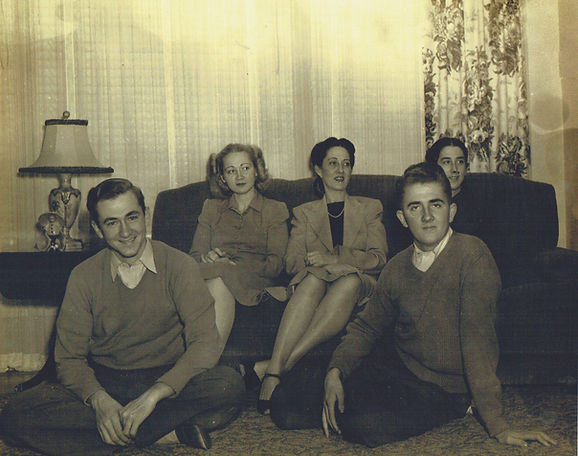
Ane Miren, Elisa, Luis, and Jon Mikel Rotaeche
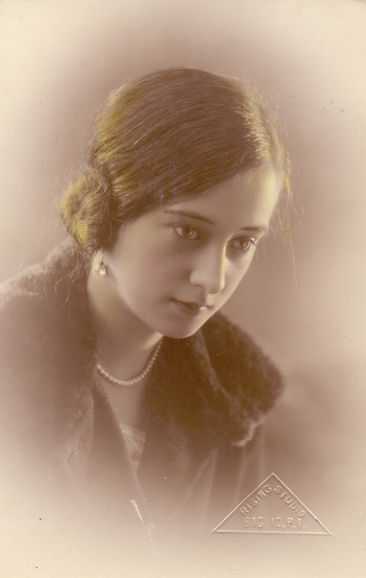
Elisa Ugarte de Rotaeche
This six-month travel time is filled with the names of different places and many happenings. There were times when we went through the jungle on horseback and walked through leech-infested swampland. There were times when my dad and the men had to hunt for our food. We passed by Bukidnon where we experienced the ravages of a swarm of locusts. The noise of their wings warned us of their approach and gave us time to take shelter in the house. They are known to consume everything in their path. It was in Bukidnon that my mother contracted virulent malaria and was helped by the American military that sent a malaria specialist, Dr. Davis to attend to her needs and necessary medicines. This endeared the Americans to my mother and she became a strong American fan throughout her life. It was during our stay in Bukidnon that the Americans surrendered to the Japanese and the American civilians who were with us had to return to Davao and give themselves up. There were many unnamed places that provided shelter for us as we continued our journey and all of them have their own particular story to tell.
One incident among many to remember was the demise of a Basque friend of my father's, Acorda Goigoechea, and his family who lived in one of the remote haciendas in Mindanao. We stopped to visit them and spent some time with them. My father had left one of our dogs Sorgiñe with him and she continued the trip with us. My father tried to convince his friend to join us but he chose to remain and the Japanese killed him and his entire family. So it is from here that we fast-forward our story to our arrival in Cagayan del Norte, by the sea. We could go no further by land.
We took shelter in nipa huts by the beach and lived as "beach residents" availing ourselves of all necessary facilities that the beach and sand had to offer.... until.... the Japanese paid us a visit. My dad sensing possible dangerous ramifications from such a visit prepared us for travel once again. We initially welcomed the Japanese as sick women and children confined to our beds. They came and looked around and left. Time was not to be wasted and we prepared for our departure that same night by batel, a large banca-like sailboat. We were to cross over to Cebu by sea and do it as quietly as possible so as not to alert the Japanese of our departure. Sails and the wind would pull us through this time. We had a new passenger with us, our dog Sorgiñe. And thus we arrived in Cebu to spend another six months with Tio Ramon and Tia Lolita.
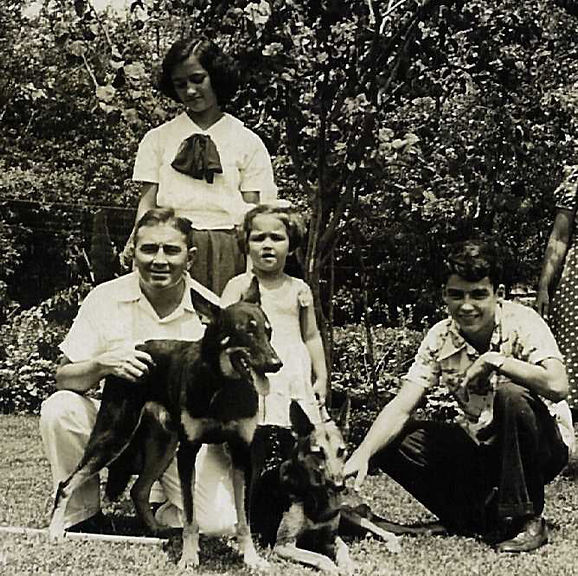
Sorgiñe with Luis, Cely, Vicki, and Ernie Aboitiz
Here the six-month stay provided us with the comforts of more civilized living and the joy of being with family. There are many memories of life in the old house in Cebu. I understand that now it has been turned into a museum. We left Sorgiñe in Cebu by the popular request of both Tio Ramon and Tio Luis. We don't know who eventually kept her or if they drew lots as to who would keep her because they both liked her.
When the long restful visit with the tios in Cebu was over, the last leg of the journey to Manila lay before us. A year had passed since our initial departure from Davao and the Japanese were no longer looking for fugitive escaping Davao residents. This leg of the journey was undertaken as passengers in a Japanese ship. Not too safely I might add, as I remember its engine caught on fire several times. That was the cause of my nightmares later on...dreams that I was a passenger in a burning ship.
At long last we were in Manila and now safely in my Grandmother Anita's house. My grandparent’s home in San Juan was called "Leku Eder" (Sitio Hermoso in Spanish) It became the refuge for every one escaping the Japanese slaughter of Manila residents during the liberation... but that part of the story is left for later on.
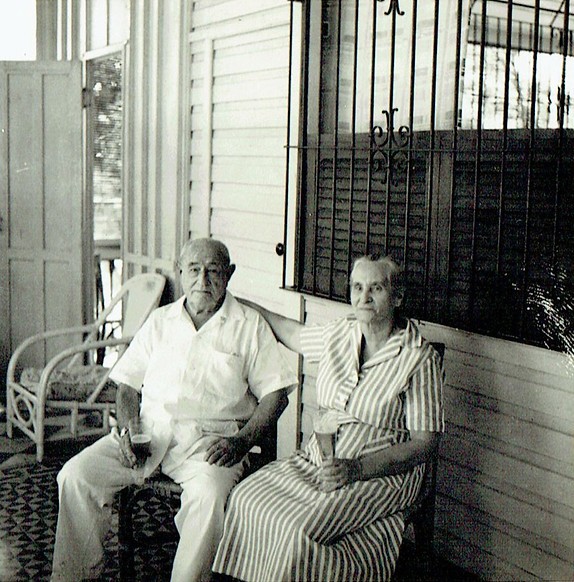
Marcelino Ugarte and Ana (Anita) Aboitiz
We resided at the Leku Eder with my grandparents for most of the remaining time of the war until the Japanese who, were known to take for themselves any house they liked, did so with the Leku Eder. They came, they saw, they liked and we were told to leave and so we moved to the Franco house across the street. We watched from across the street as the Leku Eder was "transformed" into a house to the likings of its new Japanese inhabitants. All of the interior walls were removed leaving only the roof, the four exterior walls and one bedroom and bathroom for their commandant. All the furniture was removed and the refrigerator was pushed down the stairs as a "faster way" of removal. They built air raid shelters and out houses in the garden and we watched from across the street until the tide of the war changed and the Japanese retreated in the direction of Marikina. The Leku Eder was once more free to be our home again. And so it was that she became the shelter for so many who managed to escape the slaughter of Manila during its liberation. Among them were the families of Tia Clemencia, the widow of Tio Paulino Aboitiz and a Chinese family, friends of my father who we called El Chino Jose.
The Leku Eder did not only provide shelter for those in need but was also a source of water for the thirsty. My grand father had an artesian well in the garden, which became a source of potable water for the entire neighborhood. Much of the water system in Manila had been polluted by the destruction that took place and human remains were also found in it. Thus my grand father opened a side gate to his property and people lined up with buckets to collect their share of water. There was water for all who came. No one was denied access to it.
Our sojourn in San Juan is replete with stories. We were many during the liberation and many were children. I was then nine years old. The Japanese had abandoned the house and we returned many more people than when we left. The air raid shelters became our refuge when canon balls, sailed across the sky and when airplanes fought each other in the air.
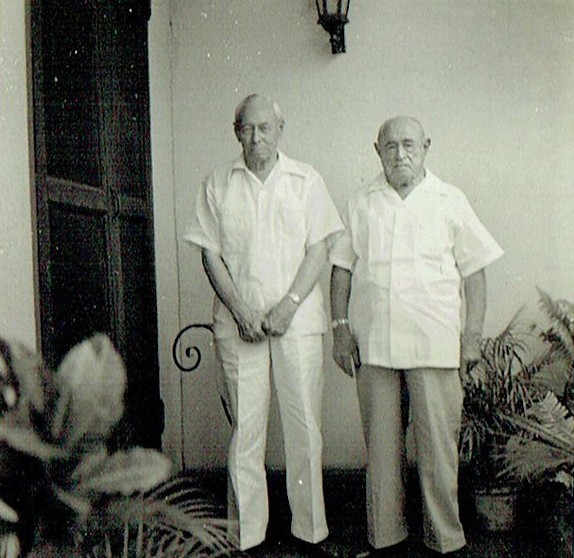
Juan and Marcelino Ugarte
My grand father Marcelino Ugarte and his Basque friends established a news network. For a man of few words, the abuelo had many good friends. Of course there was Tio Juan, his brother, who lived across the street. Their visits were not necessarily ones of many words. Much time was spent drumming fingers on the table as they sat in the garden, tararat, tararat, tararat! At times a bai (yes in Basque) would break the "silence" of the drumming tempo. These two men, my grandfather, Marcelino and Juan Ugarte, formed a network for news broadcasting... In Basque and it was relayed over the phone under the ignorant ears of the Japanese. There was no concern on being heard or understood by the Japanese. We were updated on how the war was progressing through our Basque network. Every thing was said in Euskera. They all spoke Euskera fluently.
Tio Juan and my grandfather had cows.... the cows did understand, as Basque was their language too. Tio Juan and my grand father only spoke to them in Euskera. We couldn't understand but the cows did.
As with many Basques, the Abuelo was a great walker. During the war, the Japanese confiscated all the cars and he became famous for his long walks. From San Juan to Old Manila where the Elizalde boats were moored, to Tanduay, to San Marcelino and to Quezon City . . . he walked everywhere. On Sundays he never failed to walk to Mass and was often seen on the way with his boina (Basque beret)
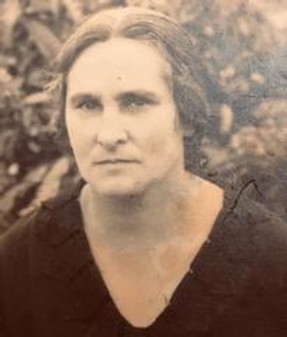
Ana Aboitiz Ugarte
When the Japanese retreated to Marikina in haste, they left many supplies behind all stored in the basement of the house. People looted then as they do now. The word got around the nearby barrio of Santa Lucia that the Japanese had left supplies in the basement of the Leku Eder and people came in great numbers to help themselves to what was left. My grand mother already older in years confronted them. She spoke both Visayan and Tagalog and they knew she meant business. She was a strong woman. We were able to reconstruct the house and rebuild the interior to its former condition with the wood and materials left behind by the Japanese

The war ended and my father returned to Davao to look into the condition of the house and our belongings left behind. There was no house . . . The looters had descended upon it and removed every part of it except the stone steps that led into the house. There had been no one like my grandmother to confront the looters and they helped themselves to everything in the interior and exterior of the house. An American friend who was kept prisoner there told us later, that the Japanese used it temporarily as a concentration camp. He salvaged a Zazpiak Bat (a tapestry of the Basque coat of arms) given to my parents by cousins of my dad. It is the only thing that was salvaged by that American friend who knew my dad and kept it for him. Presently it is in the possession of Xabier Rotaeche, my nephew, because I gave it to him. It had to remain in hiding for years until the dictator Franco died.
My mother, who was a concert pianist, also lost her Steinway piano. It was later seen and had become someone else's possession. One needed proof as to the way it was acquired and we had none. With the exception of these two items all was lost even the dog we left behind. It was a strong pill for my parents to swallow. But life goes on. My father later returned to Davao to resume his job with Elizalde. We lived there for some years until he was sent back to Manila where we remained.
Emilio Ugarte
3rd Generation, Ana Aboitiz Ugarte branch, from Jaime Ugarte's 2019 interview
My father (Emilio Ugarte) moved to Manila and started to work as a manager for the Tanduay distillery in the mid-30s, so we were in Manila during the war.
My grandparents, Marcelino and Ana bought a big block of land in San Juan, so our family moved from Malate to there. When we moved to San Juan, it was like moving to Laguna at that time. My parents hated it. But it was a blessing in disguise because when the war came, a lot of people died in Malate.
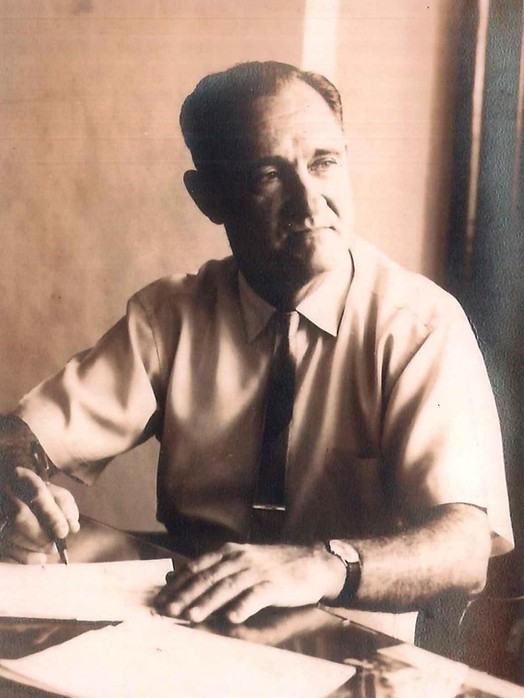
Emilio Ugarte
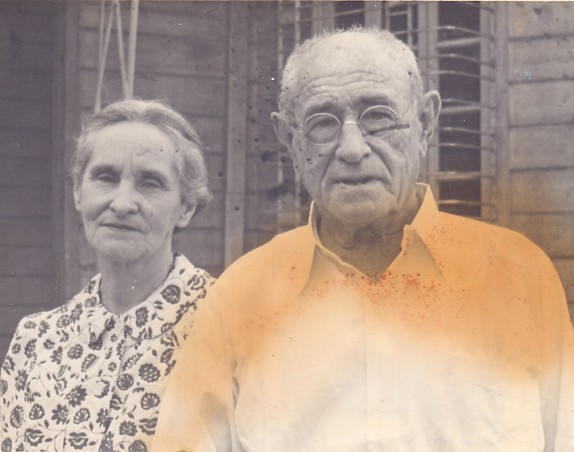
Ana Aboitiz Ugarte & Marcelino Ugarte
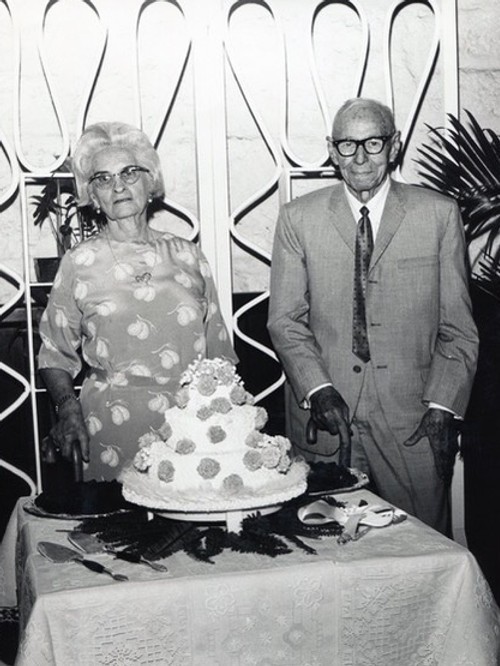
Dolores Aboitiz Ugarte & Juan Ugarte
My grandfather’s brother, Juan Ugarte, who’s married to Dolores Aboitiz, lived right beside us. The place in San Juan became a refuge during the war. A lot of relatives used to stay with my grandparents there – at one time, there were around forty-one people in that house!
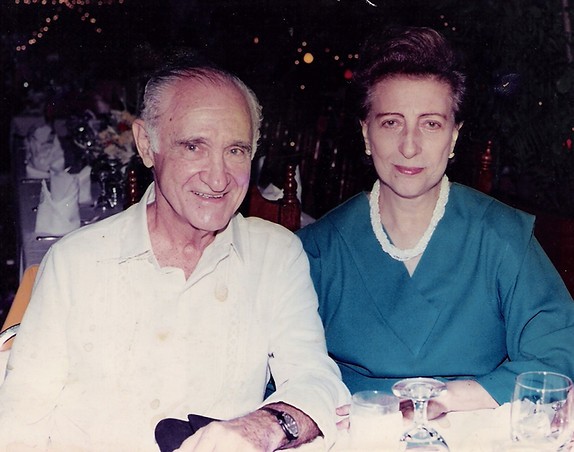
Emilio Ugarte & Margarita Sanchez
My mother was a nurse and during the war, she gave injections to the relatives living with us. Both Louie Aboitiz and Ernie lived in San Juan after the war and they would kid around with my mother because she used to give them injections. She gave injections to everybody there.
My grandfather made a huge well at the house and everybody would go there to get water, even the Japanese. Luckily, the Japanese there were kind of friendly.
Other families were not that lucky. I was told that Manuel Elizalde was in Fort Santiago, incarcerated by the Japanese, and his two other brothers were beheaded for being suspected of being in the guerilla. My uncle Sebastian, who worked for the Philippine embassy in the United States, had many stories of Filipino families living in exile there.
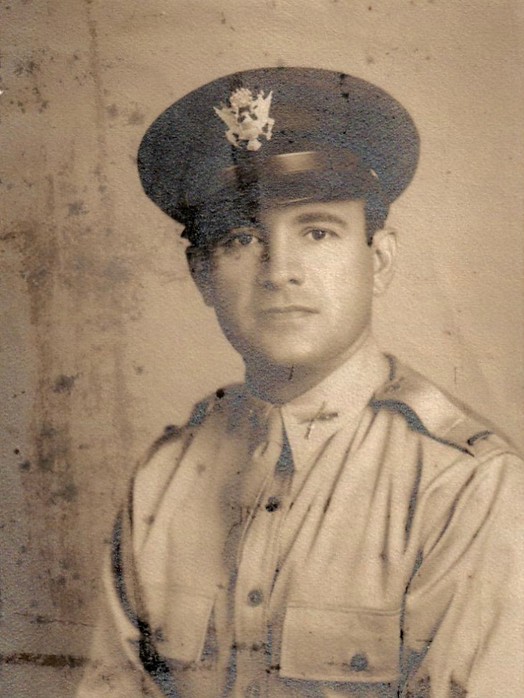
Sebastian Ugarte
Sebastian (brother of Emilio) came back when MacArthur came in to liberate the Philippines and landed in Leyte. Sebastian was there. He came together with MacArthur, Joaquin Elizalde, and Carlos Romulo. They went to Leyte.
They were in some bahay kubo holding office there. At that time, the president was Sergio Osmeña already as Quezon had died in the States. So Sebastian became the secretary of Osmeña. They were holding a cabinet meeting there. Meanwhile, the government was restructuring. All of a sudden, a Japanese plane started throwing bombs near their area.
When the first bomb exploded nearby, the first one to jump out of the bahay kubo was Carlo Romulo. Everybody disappeared. The only ones left were Osmeña and Sebastian. My uncle wanted to jump out but Osmeña was there. He was holding papers to let him sign. That was the Philippine government, true story. That’s where Sebastian became close to Don Andres Soriano.
Paulino Ugarte Jr.
3rd Generation, Dolores Aboitiz Ugarte branch, information provided by his family
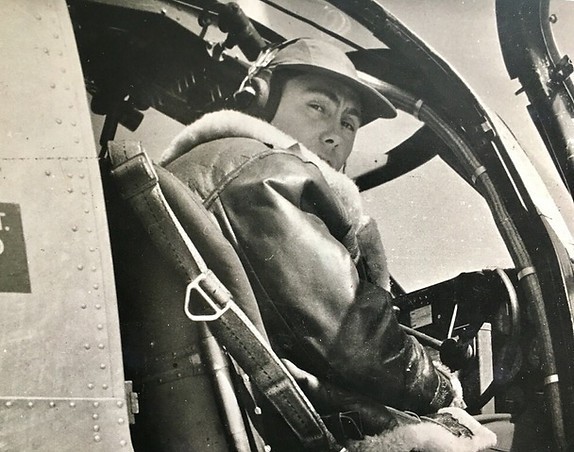
In June 1944, the invasion force of 160,000 Allied troops, one of the largest assembled in history, landed in Normandy, France. US Air Force Captain Paulino Ugarte was among them.
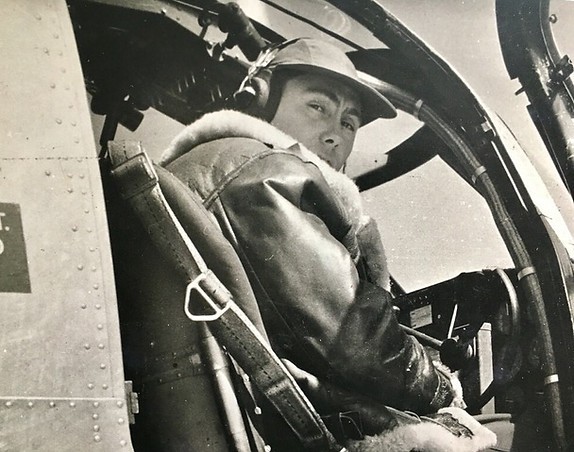
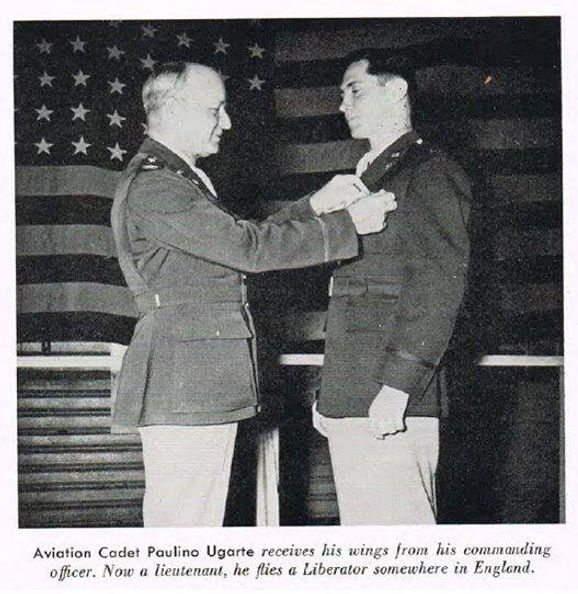
During the Commonwealth Era, Ugarte graduated from La Salle College in Manila. At some point shortly thereafter, he must have enlisted with the US Air Force. With the Allied nations needing all able-bodied men at the time, Ugarte was put on the fast track for pilot bomber duty. By November 1943, he was already co-piloting missions over Nazi Germany, flying B-24s/Liberators. Among the aircraft he flew, one was named “The Lemon Drop,” another, a B-24 was called “Princess.”
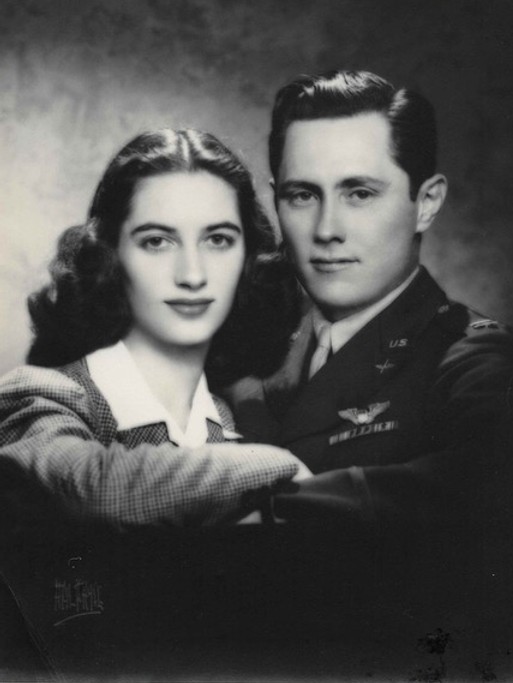
Paulino was the son of Dolores Aboitiz and Juan Ugarte. He was married to Elena Elizalde.
Maria Antonia (Tona) Aboitiz Ortiz
3rd Generation, Paulino Aboitiz branch, from her 2019 interview
On December 8th, the Japanese bombed Pearl Harbor. World War II started. That was the day of my First Communion. I remember that because we were all dressed up in gala uniforms, all in white. In the church, in mass, we had just received communion. After the mass, the nun announced that there would be no celebration. There usually was. They had breakfast right in the school. And so my mom took us home and I was wondering, ”Wow, what happened?”
The Japanese entered Manila on the evening of January 2, 1942 and they entered very quietly because Manila surrendered. I remember being 8 at the time and we lived in M.H. del Pilar, which is right by the Manila Bay. So we stayed there for a couple of years and the Japanese were all over Manila
When the war first started, when it was known that the Japanese were going to come in to the Philippines, Tio Ramon, my uncle, told my mother, “I’m sending a boat to Manila. All those from Manila get on that boat and come to Cebu.” I believe my mom must have hesitated because thereafter the Japanese took over Aboitiz Shipping so there were no ships. There was no way to get to Cebu, where it was much safer. So my mom was stuck here with her four kids.
When the Japanese took over Manila, we had to learn Japanese and write Japanese. Sometimes the Japanese group would come to see if that was being done. They would call at the pupils, “You, talk to us in Japanese.” Like, what is your name in Japanese and you better know what your name is or how old are you. You know, simple sentences. We really had to learn Japanese.
Our Japanese teacher was not a soldier. Before the war, there were Japanese already in Manila working in companies and some had high positions. They would work as gardeners and in companies and they were spread all over Manila. When the Japanese invaded Manila, many of them were actually officers and they spoke English. They were sent here; maybe I would say, 10 years ahead of the invasion.
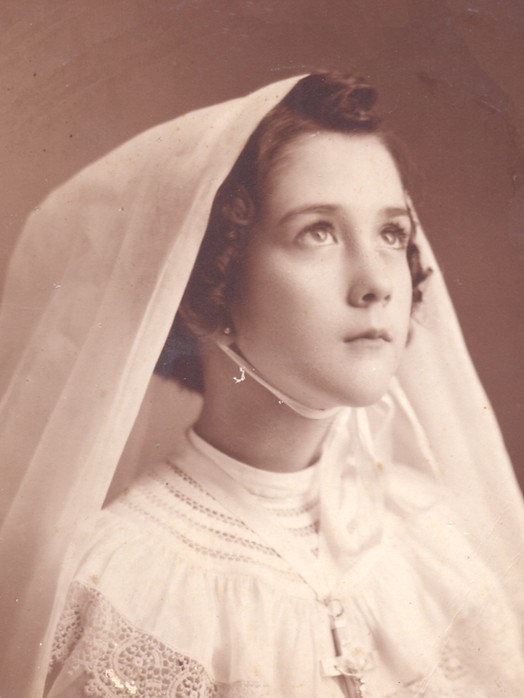
Tona Aboitiz Ortiz
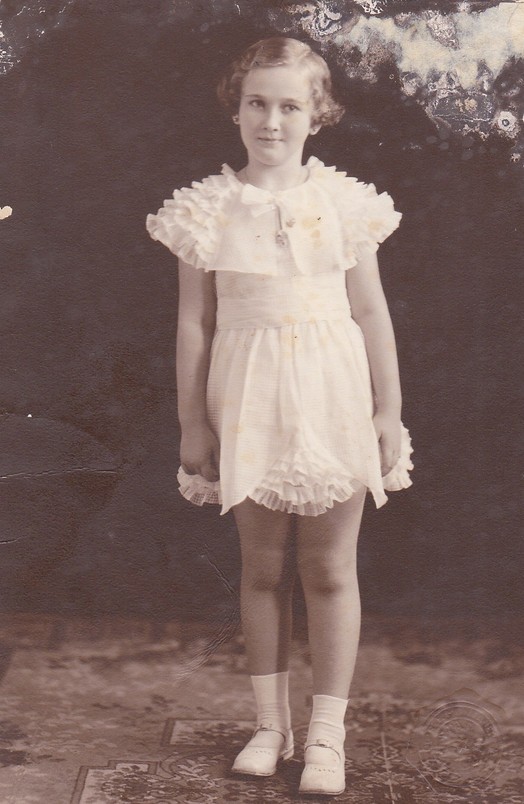
Teresita Aboitiz Carcovich at eight years old
We went to school - maybe for the first year we were able to or the second - but then it got a little bit dangerous because the Japanese were putting roadblocks on the streets. My sister was 16 and she was very blonde, so she used to go to school in a bandana so that her blonde hair didn’t show. We had to walk because they removed our cars. The Japanese would make us bow - kneel down and bow to them. My sister came home one day and she said, “I told them I was Spanish but they said, no, you are American” because she had blonde hair and blue eyes. My mom said, “Forget school because one day they are going to slap you around.” That’s when we decided not to go to school.
My brothers had a teacher from La Salle who was the coach, a soccer coach, or the basketball coach. He was maybe about 35 or so. He used to come because he lived nearby and taught my brothers. Now, in the case of my sister and I, I don’t remember studying. I don’t know about my sister but I was just climbing trees and having fun until you know, until the real thing happened when the Americans came in and that was rough because then the Japanese started killing.
The Japanese took all the properties, cars, any house that they wanted to use, they got. Beside us was the house of Chloe Cruz, who is now Chloe Periquet. Chloe was my classmate in Assumption. She was an only child; with her mother and the dad they lived in a three-story building. They were allowed a room in their own house, and the rest of the house was taken over by Japanese officers. But they were polite and not rude at all. These were officers, so they were a bit more educated.
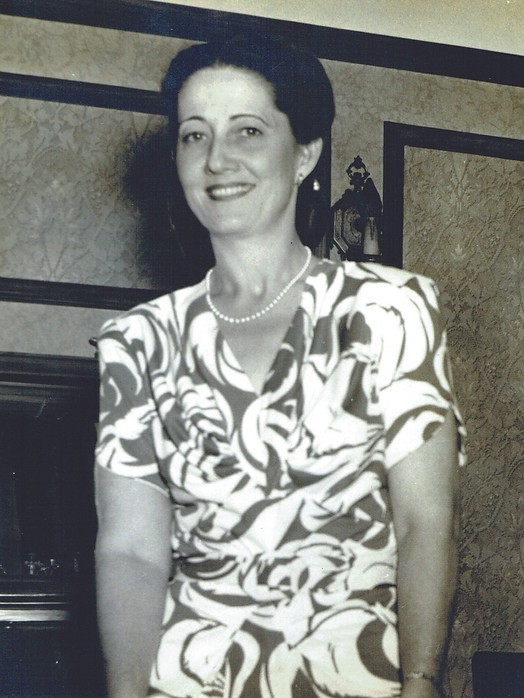
Clemencia Clausen Aboitiz in the 1960’s
One of the officers had an eye for my mom, because my mom was a very beautiful woman and she must’ve been 40 plus at that time. He would bribe us with chocolates over the wall. “I’ll give you chocolates but you tell your mom to invite us to dinner, to invite me.” He was a general and he studied in a top school in the US, I don’t remember if it was Yale or Stanford but one of those. He spoke perfect American English. A very tall man, Japanese but from the northern part because he was quite handsome, tall and thin, and very polite, not the run of the mill.
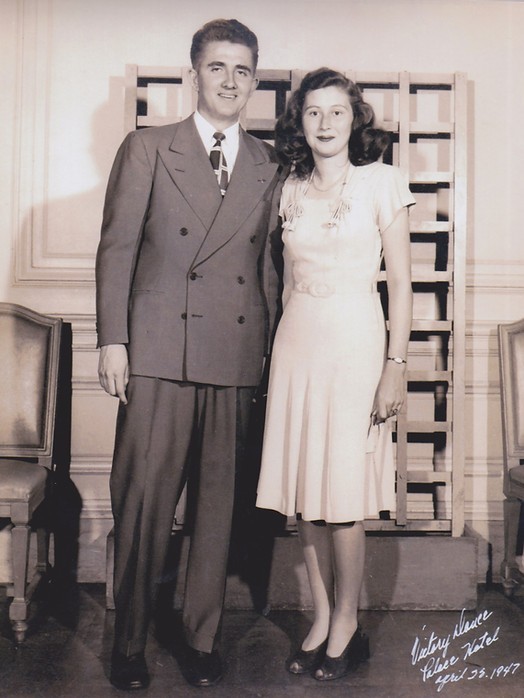
Mike Aboitiz and date, 1947
They were from the Air Force. Mike (Jose Miguel Aboitiz, my brother) and I used to go there to use their training stuff. They had like a wheel that you tied your feet on it and your hands and then push yourself and it would go around and around, you know, in circles all the way down their driveway. They had all these exercise stuff we would use as toys because we’d come out a bit dizzy. This guy used to say he wanted to meet my mom so he would give us chocolates. My mom used to say, “Return that right now.” And Mike used to keep one or two chocolates.
I remember an incident of one boy that stole something and they hung him on a lamppost in front of our house. The Japanese had maids but mostly Filipino boys attending to their needs - cooking, washing, whatever. They caught him stealing from them, probably out of hunger. He was tied to a telephone pole backwards with his toes touching. He was on tiptoe until he died. He would ask for water and they would throw saltwater on him. So whatever he had from the beatings would hurt. They would beat him with something like a leather thing and we would see that from our house. Our cook, Abing, would go very late at night and give him water and a banana or something to feed him. My mother found out about it and said, “You know, that’s pretty dangerous, Abing. If they catch you, you will be hanging there as well. And the longer he hangs, the longer he will live. So, he’s better off dying quicker. He has water and they give him water, which is full of salt, which is so painful on the wounds. You’re not doing him a favor.”
The Japanese were in Manila for the next four years, for the whole war and they were our neighbors. While they were there during those years, I didn’t see a lot of cruelty except for what my grandfather told us after the war because he was in Sto. Tomas.
My maternal grandfather, John Benton Clausen, was a colonel in the American military. During the war, he was caught and put in the concentration camp and he told his children to burn their American passports. To say that we were not Americans. And he also told them not to visit him because he was an American and they’d catch us. He was married to my grandmother, Isabel Cabrera, who was from the Philippines, a Spanish mestiza. So she couldn’t visit him, neither could my mother or my aunts.
I had three uncles (brothers of my mother). Two were in the States and the third one was here in the Philippines. One was a lieutenant in the navy, the other one was in the merchant marines, and the one in the army who was also a lieutenant was here in the Philippines before the war, Maynard Clausen. He was here all this time but with the Americans. My grandfather as well was caught here. So all the Americans here were put in concentration camps. There was no way they could get away from it because they were from the army. And my uncle was a lieutenant who had this group of soldiers under him. He was caught and was in the death march of Bataan.
After the war, the Japanese took all the Americans that were in concentration camps and put them in a boat. There was a rule; I guess it’s a United Nations rule, that nobody could bomb a ship that had a Red Cross. That meant that these people were wounded. You could not bomb them, but the Japanese were smart. They put the Red Cross in the boat that they, the Japanese, were in. All the soldiers here were leaving for Japan when the war was ending so the Japanese put the Red Cross on their boat and all the prisoners they could gather, among them my uncle, they put in a boat without the Red Cross. This was going to Japan. I don’t know what they were going to do to them, maybe concentrate them as well, maybe exchange them for their own people that were prisoners or use them. That boat sank and in it was my uncle.
My other uncle that was in the navy came out of it, but he was a goner. He was in the navy and apparently a canon hit him in the chest, a canon of the Americans. It was an accident, he said. It hit him so he was flown to the States and he had to leave the navy. He survived.
My two uncles got the Purple Heart and my grandfather too. Where those Purple Hearts are, I don’t know. The three of them, two uncles and my grandfather.
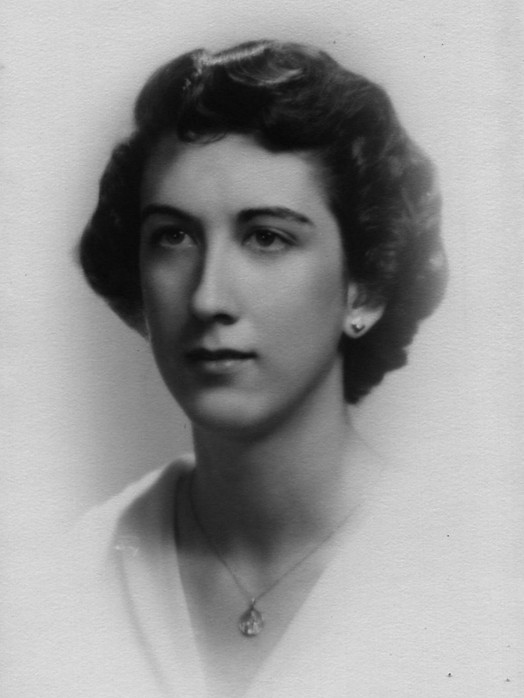
Tona Aboitiz Ortiz
I must’ve been 11 or 12 in 1945 when the Americans came in. At that point, there was a lot of burning done by the Japanese. They were burning houses. We left and we moved from the M.H. Del Pilar house to a house in Agno St. I don’t know if it still exists, but it was a little bit in the interior, which is not close really to the beach, Roxas Boulevard. It was safer because they were starting to burn all the houses when we moved to the Agno area and the Americans did start to come in by land and sea, and they were really destroying Manila because the Japanese wouldn’t surrender. They also were burning houses where we were in Agno Street, so we had to go to an empty field with others of the neighbors and we stayed in that area for maybe about 5 or 6 days until the Americans actually came in.
We were in an empty lot with mattresses on top with us in like a shelter with a little entrance. My mom had water and clean milk and we were all there -- my family and the family of Tomas Mari. His wife, Lulu, was my mom’s best friend. They were our neighbors there and we all joined together in a shelter, but it was really just open air. We had very minimal food. In that empty lot there were about 25 other families in the same condition, in little shelters. There were bombs or rockets and some of the people got hit.
At one point, one of the maids of somebody near us was outdoors and when they started the shelling (it was sporadic, there were times of nothing). People would go out and stretch their legs, but my mother said, “You don’t go out at all.” This maid of a neighbor was suddenly caught outside in the field when they started shelling. She came into our place, but we were all crowded and she sat crouched beside me, but she had already been hit and she was dying. My mother was on my other side and I said, “Mom, this lady is leaning on me. Tell her to move.” She was leaning her whole body on me. “She’s heavy, she’s leaning all over me.” And my mother looked over and said, “She’s dead.”
The Japanese annihilated all the people that were hiding in the La Salle school and we were a bit further down in that empty lot. When the Americans came in, they were across the street from us. And they were saying, on megaphones, “At the count of three, you will run towards us, do not hesitate.” They said it to us in Spanish and English because they were a Mexican battalion. Then, from the La Salle area, the Japanese were hearing the Americans. It was street to street and my mother was saying, “How are we going to cross?” Some of us would just hold hands and run and the Americans would say, “Don’t worry. We will run towards you so that we can then go in back of you. You just run towards us at the count of three.” And from La Salle, we were hearing the Japanese saying, “Go ahead, cross the street. We won’t see the Americans, but neither will you.”
We took Lulu because a big shell hit her husband in the stomach. He went to the entrance of our little air raid shelter to smoke and got hit. He was dying and we had to leave him. I saw, for the first time in my life, intestines and stuff. He was holding on to his stomach and as a young girl, I was so . . . I cannot forget what I saw. He was telling his wife, “You have to go” because they had five sons, five children from the age of Xabi (Tona’s other brother) all the way down to my age. And she didn’t want to go because he was alive, but we had to run. We had to. When the Americans said hold hands and cross, my mother said, “Lulu, you have to go.”
My mother told Lulu, “You have to leave. You have to. You have five children” and her husband, as much as he was dying, told her the same thing. “You have to go.” So my mother told Lulu, “We’ll come back for him. We’ll come back after.”
Xabi, Teresita, Clemencia, Mike, and Tona Aboitiz, San Francisco, early 1950’s
When we started to cross, they started to machinegun us, some of the people in that area just fell down dead or wounded. I got hit on my foot, a little bit, a minor thing and then we ran and the Americans ran towards us and that was it. They spoke to us in Spanish. My mother was thrilled. She had a scapular medal, these gold medals; she took it off and put it on the American that was closest to us. “So this will protect you.” The fellow who was a Mexican said, “Gracias, Señora” and he continued fighting the Japs. I don’t know what happened to him.
So we met the Americans and they said, “Walk towards San Juan” because San Juan at that time was like the province. And we had two uncles there, Tio Marcelino and Tia Anita and Tia Lola and Tio Juan. They lived in San Juan. And that was far, like going to . . . now you’d be going to, let’s say Tagaytay or somewhere. We walked and walked. We put Lulu in a wooden cart because she was hit bad.
They had like small clinics along the way where she was initially taken care of but my mother dropped her in Sto. Tomas where they had a hospital of the American army to really take care of her because she eventually caught tetanus. My grandfather, who was in Sto. Tomas, said “This is my daughter as well,” which was not true, so she was able to stay there and get tetanus shots and get cured. My mother took Lulu’s five children with us and we walked and walked to San Juan.
Our walk from where we were in Agno all the way to San Juan, there were dead bodies all over the road. Already black from exposure. Black and swollen. I can never forget this because it’s so vivid what we saw, you know . . . dead.
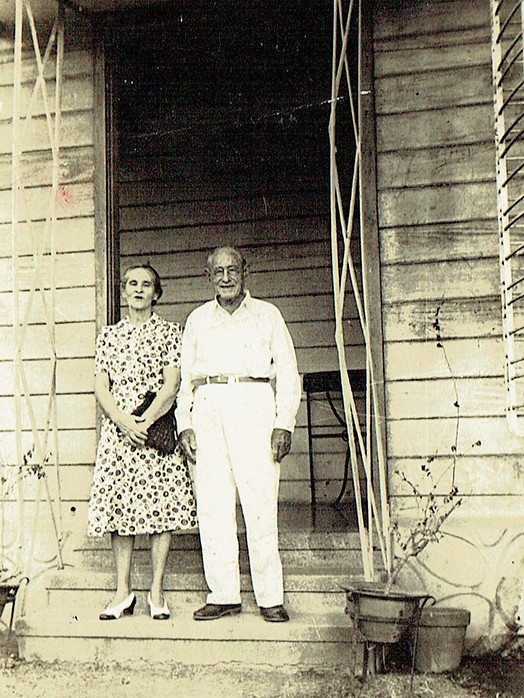
Ana Aboitiz and Marcelino Ugarte
When we reached San Juan, we saw that Tia Anita’s house and Tia Lola’s were intact. They were happy to see that we were alive, but we were nine children plus my mom, and our cook, Abing. So we were eleven people in that house. There were others - friends of theirs that were coming from all over Manila. That house was housing I don’t know how many people, but we stayed there until we were finally . . . Maybe we stayed there two weeks or so until my grandfather was able to put us, my mother and her four kids, in a troop ship. It wasn’t any ordinary boat; it was a troop ship. American soldiers that were being sent back to the States either discharged or whatever but we were with them.
On the boat, the soldiers were on the deck and we had the cabins. We had little windows and the soldiers would tell Mike and I, “Here are some chocolates. Introduce me to your sister” because she was a teen, about 18 years old. We were not allowed to fraternize but since we were kids, we would leave the cabin and go and they would give us chocolates. “Here, here, introduce us to your sister.” We would say, “We can’t. We’re not allowed to be here.” And we would go back to this cabin with this much chocolate. I must’ve caught cagaleras galore (diarrhea) because we never had all this.
The war had not officially ended in Japan. There was no signing of peace yet, so we would travel at night, in the dark, totally. The ship was in total darkness. You ate early, at five, you had dinner and then stay in your cabin and there was a total shutdown of lights until the next morning because we were travelling like incognito. It was still officially war.
Xabi Aboitiz
3rd Generation, Paulino Aboitiz branch, from his 1995 interview
I was thirteen when the war started. It was December the 8th , the Feast of the Immaculate Conception. I was at the Malate Church and Paco Vallejo, a friend of mine, came to me and he said the war had started. I had no idea what the heck he meant. Paco was a little bit older than I was and he kind of understood some of these things.
At the beginning of the war, we had a good life because there was no school and the La Salle alumni started a little club and we got to play handball. Food wasn’t scarce. It wasn’t that bad, although we didn’t have good food anymore that we were used to, like butter and things like that. That was kind of gone, but we still ate well and life seemed alright.
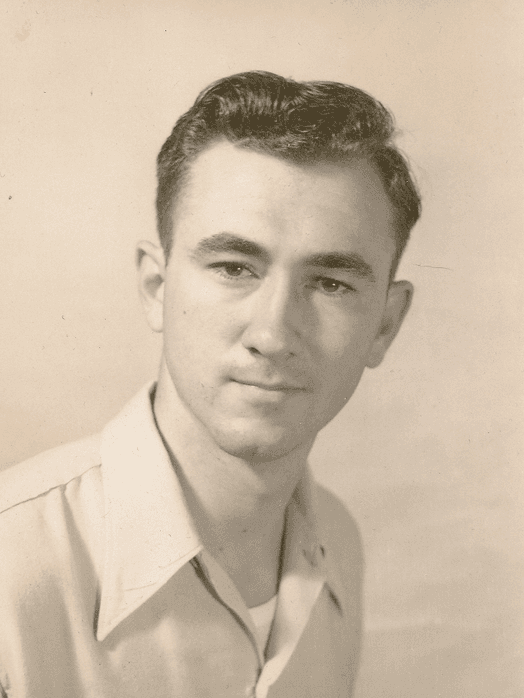
Xabi Aboitiz
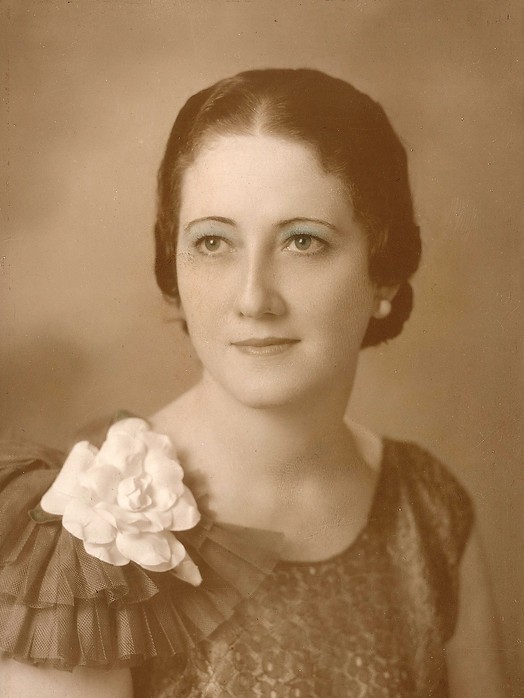
Clemencia Clausen Aboitiz
My family stayed in Manila during the war and my mom was alone. We were living in Malate then, by the Malate Church, on M. H. del Pilar near the corner of San Andres. When the war started, we evacuated to Novaliches. Aboitiz and Company owned a dairy farm there, which Iñaki Zabaleta was running. By that time, Ramon Zabaleta was sort of courting my mother and my mother had gotten a little bit close to the Zabaletas. Ramon was working for Aboitiz and Company in Intramuros on General Luna Street.
In Novaliches, I remember watching dogfights in the skies over Manila. A P-40 was once being shot down and was coming down not too far from the farm and we went to see. We hadn’t seen the markings because when that P-40 fell, it was against the sun so we couldn’t see. We went there and we saw the pilot. He was an American.
And then we went back to Manila and we drove to the Mari’s house. My mother was very close also to the Mari’s. The lucky thing behind all of this was, even though my mother was a widow, she had a lot of support in terms of friends. The Mari’s were early childhood friends of my mother. In fact, my mother’s mother, was a close friend of Lulu Mari’s mother and grandmother. I was also very close to Pocholo Mari by then. So there was that support system.
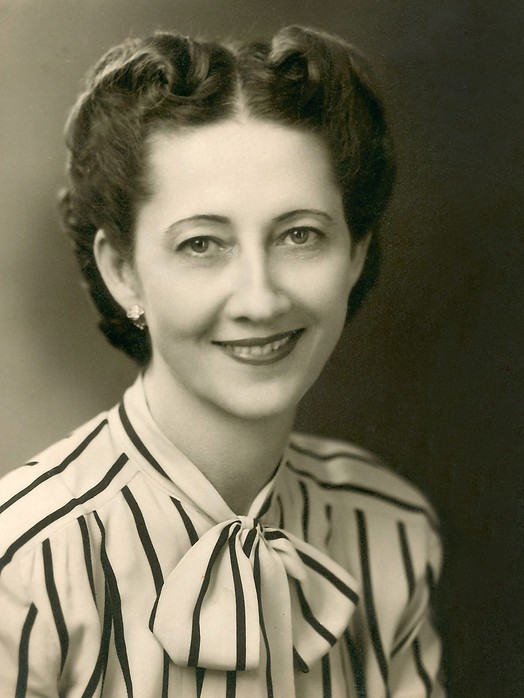
Clemencia Clausen Aboitiz
I remember that my mother went to Dominador Tan, who was the big Commonwealth official to go see. My mother was a U.S. citizen and she went to make sure that her citizenship papers were destroyed in the United States Commonwealth office. I remember that part when she took off for Dominador Tan and came back just in time for us to see the first Japanese patrol. Then she went to the Philippine Legislative Office and Dominador Tan somehow had the key and he drew up a Residence Certificate for my mother, which was very courageous of Dominador and that’s how my mother was not interned in a concentration camp because with this Residence Certificate she could prove somehow that she was a resident.
We lived in M.H. Del Pilar while the fighting in Bataan and Corregidor was going on. I remember seeing the planes flying, Japanese planes, to bomb Bataan and Corregidor and the artillery getting more intense. You could hear the artillery firing from Cavite. The Japanese had taken over Manila by then and there was a level of intense fear that’s different. What are these guys going to do? Nobody actually knew.
I would go to the boulevard and watch the cavalry, the Japanese horses, coming in. The Japanese used to cremate their bodies, the dead soldiers, and an officer would carry the ashes around his neck in a box, and we would watch this. And of course, they were the enemy. We would watch them coming in and I guess those were replacement troops.
I remember when Corregidor finally fell. Bataan had fallen but we didn’t know that a death march was going on. We didn’t know anything about all that. But I remember the march from Corregidor, which was marched all around Cavite down in front of the boulevard. We watched all of these Americans, these were American troops. In Corregidor they were mainly all American troops. The Philippine troops had been in Bataan and they had been taken up north in the Bataan peninsula towards Capas, San Fernando, and Tarlac. This we just heard, we never saw them, of course.
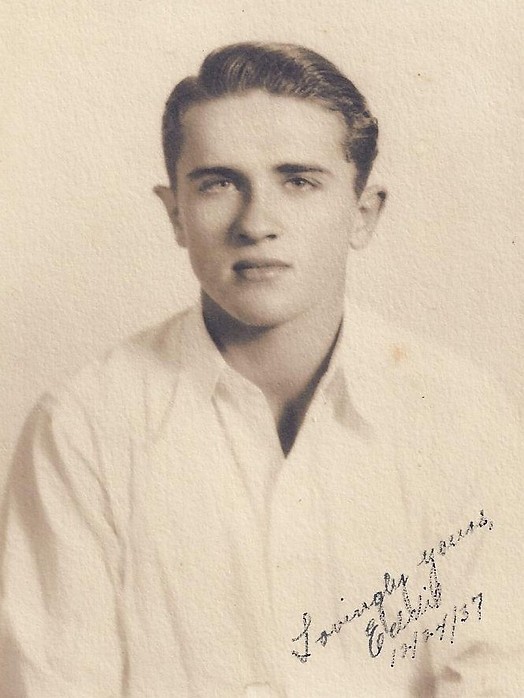
Eddie Aboitiz, 1937
Then, somehow or other, things got leveled off. It got peaceful. Tio Ramon, at one point, came to Manila. Boy, was I glad to see Tio Ramon, because in my mind, Tio Ramon personified security. My mother was glad to see Tio Ramon. He had taken a trip on a batel, a large outrigger. Then, Eddie Aboitiz came and I was glad to see Eddie too because Eddie to me personified class. He was a very classy guy. Eddie was a young man then and he was courting somebody. I don’t quite remember her name. And then Hank came. And I thought, things are going to be all right. The Japanese are here but these guys are here. They, in essence, were a symbol, maybe not a symbol, maybe that’s the wrong word, but they really were important and my mother saw them as important. The Zabaletas were there and they were important because they also gave us a sense of security. And then Tio Ramon went back and Mariano Gonzales came to Manila.
Pastor was starting in Ermita and one of the people that started working there was Emil Porter who was married to my mother’s sister, Vida. They started a small little coffee store that sold roasted coffee. It was somewhere on M.H. del Pilar. My job was to clean the motors, a whole bunch of motors there and that’s what I did. In this dark kind of a place, in the back, there wasn’t enough light but that’s what I did.
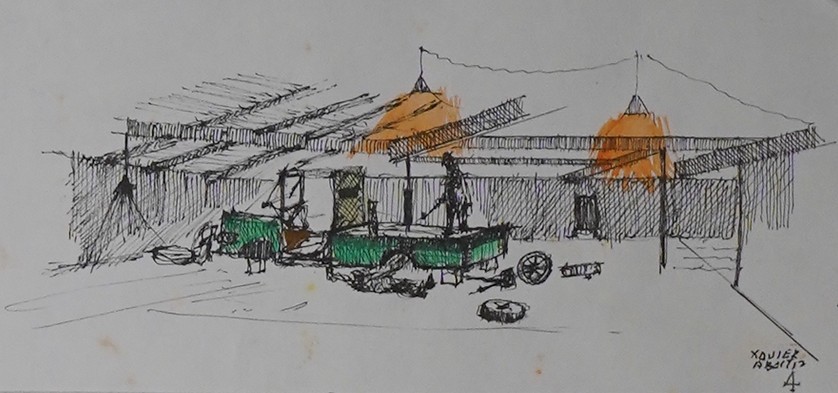
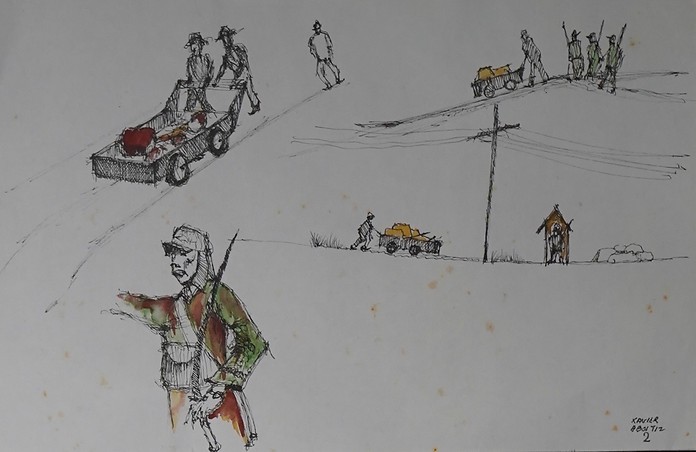
Paintings by Xabi Aboitiz
Aboitiz had a truck at that time. The Zabaletas grabbed a hold of this truck and they broke it down in parts. They started to distribute these parts. We took them around in handcarts. Nobody had cars then. And this truck was in several parts scattered through out mostly to San Juan, somewhere in San Juan. That’s the truck that after the war they put together again.
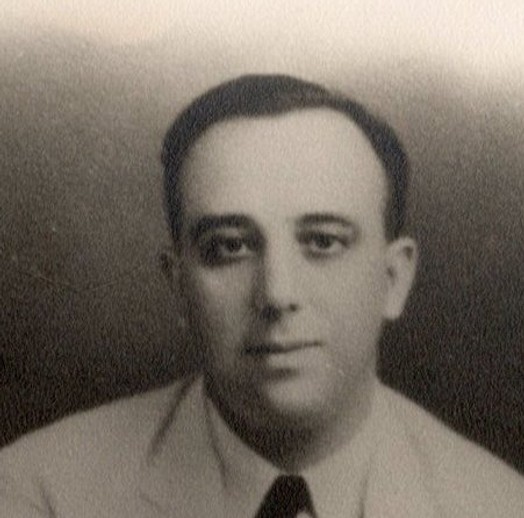
Luis de Rotaeche
Then I caught dysentery. I went to San Juan for a while there. I was living in San Juan with Tia Anita and somehow or other I caught dysentery. I didn’t know I had dysentery. All I knew was that I had a horrible case and Luis Rotaeche, Eliza Ugarte’s husband, started to help me. He somehow knew what I had and he said, you have dysentery. And there I was, blood was coming out of me. And my mucus, which was really my intestines mixed with blood, was coming out of me. And Luis Rotaeche had some pills, which he gave to me. There were no medicines then. I remember Luis Rotaeche sitting with me late at night just kind of talking to me being very gentle with me and comforting me. Because that’s all I ever did was go to that toilet. And, of course, it was contagious so I had to move my waste matter on a chamber pot to throw it away somewhere so it wouldn’t mix in with the rest of the toilet system. Then I went back to Manila and there I was, an absolute horror case. I must have been going to the toilet fourteen-fifteen times a day. I remember Dr Moreta coming around the house and sure enough, he confirmed it.
There were no medicines so I had to drink boiled guyaba (guava) juice. And then roasted corn and then, once in a while, Abing, the housekeeper, would find liver but not too much of that because I couldn’t digest it. I comforted myself by reading. I was always in pain.
For some reason, Dr. Moreta found some Neosulfazone, which was used to cure syphilis. He found three or four ampules and my mother took me to Dr. Moreta again. I remember walking there from M.H. del Pilar in pain to take these shots. One or two ampules were given to me at Dr. Moreta’s clinic and walking back, I think I must have been weighing at that point around one hundred three pounds or so and walking back and forth to take these shots. They were very painful because the joints would hurt. Luckily, I got cured. Which is like saying “magic”.
By that time, we moved to another house because we were living close to the bay and the Americans were intensifying their efforts. The war was coming to Manila. The landings had started in Leyte. We found this out and we went to a house on Agno Street near La Salle. In there, one evening, there was an intense fire in the north and the following day an airplane flew down and dropped leaflets saying that MacArthur had liberated Manila, which was pure nonsense because that hadn’t happened yet.
Then the fighting started, the fighting meaning artillery fire and mortar fire. The Japanese came in to the back of our house and I alerted the family, that there were Japanese in the back and they were carrying cans. So we all ran out the front door and they set this whole area near Agno Street in La Salle on fire. That was it.
We lived out on a field and we were there for about ten days. In the meantime, there was rocket fire going on over us and mortar fire hitting us and artillery fire. People dying all over the place. One particular day, in the most intense mortar fire, Mr. Mari, the husband, had gotten hit in the stomach and his intestines were badly mutilated.
They said that the American soldiers were on the other side of Taft Avenue and they were about to level the whole area so we marched out and Mrs. Mari, Lulu, had gotten badly hit on the shoulder so we, Pocholo Mari, and I, put her in this cart and we pushed her in front of us and we took off. We expected the Americans to be on the other side of Taft, but no, they were right there on the same side on a grass field. It scared the hell out of us because to us, the American soldiers wore khakis and these guys that we saw on the field of grass wore green uniforms. The Japanese marines used to wear green uniforms so it scared the hell out of us because we thought we were going right into their hands. But they were Americans so anyway there was great rejoicing, of course.
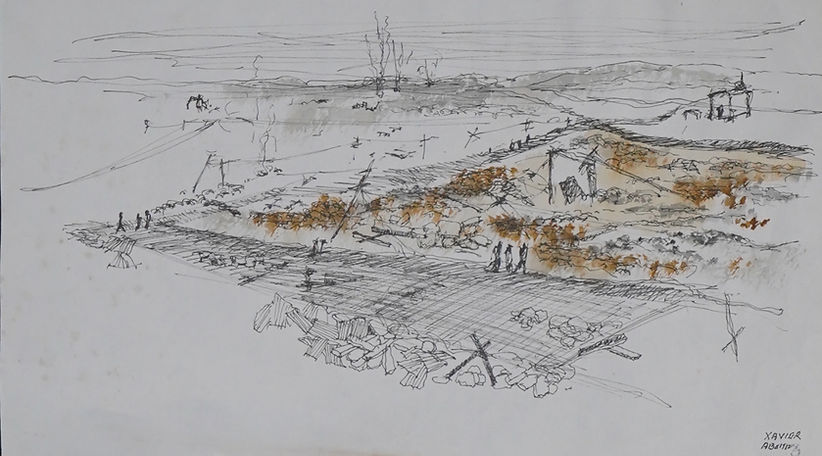
Painting by Xabi Aboitiz
I was happy because we were going to live; I was going to live. And none of my family had gotten hurt. We marched off and we wound up in Malate and parts of Paco. I remember seeing dead Japanese people and dead soldiers. I remember that we went to the church in Santa Ana and my mother saying, well, you better go on to the Ugarte’s house in San Juan.
There was a pontoon bridge because the bridge in Santa Ana had gotten burned. I got there and the Americans weren’t going to let me cross that bridge on foot. Only military personnel, they said. I remember telling this guy, “but I am an American; you have to let me cross.” And he said no. So I went to the side and there was a little boy there. He told me he wanted money and, of course, I didn’t have any money. But I had a small little pocketknife, so I told him, “If you take me across the river on a banca or outrigger, I’ll give you this knife.” And the boy said okay.
He started to paddle across and the hull had a lot of little cracks and that thing just sunk in the middle of the river. So I had to swim across the river. I hadn’t eaten for a number of days, I don’t know how long, but that’s what the desire to live makes you do. You go beyond your physical capabilities. So I had to swim that river and it was flowing and I remember pushing a few floating Japanese bodies aside. How did I know they were Japanese? Because they had uniforms on.
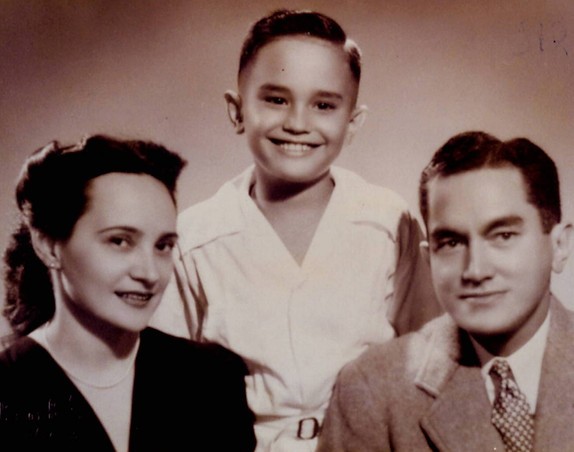
Mercedes, Jose Antonio, and Tony Gonzalez
So I got to the other side of the river and I just lay there for a while. Then, I started to walk towards San Juan. I remember walking up to San Juan and the Ugartes were there – I remember Tony Gonzalez, Mercedita Gonzalez, and their son, Jose Antonio. Everybody was in Tia Anita and Tia Lola’s house. Juanito Ugarte meets me and asks, “Are you alone?” I say, yeah, I am. And he interpreted that the rest of my family had died.
They all got very excited because I was the only one coming into the yard and they all came down because they assumed I was the only one alive. I was brought upstairs. I took a shower and sat down in the veranda and they gave me something to eat.
Sebastian Ugarte
As I was sitting there, Sebastian Ugarte pulled in. Sebastian was a major in the U.S. army and he pulled in in this truck. That was another moment of excitement. Imagine, they hadn’t seen Sebastian at all during the war - even prior to that. Sebastian asked me where my family was, my mother, my brother, my sisters and I told him they were by the Santa Ana Church. So he sent the staff car and the driver went there. Sometime in the evening, my mother and my brother and my two sisters were brought back.
There must have been thirty-five people in Tia Anita’s house. Who knows? All I remember is sleeping on the concrete floor, on the tile floor in the veranda. Things were good - we were alive.
We went on to acquire a little canned goods from the army. Fighting was still going on in Manila, but it was kind of somewhat winding down. Or at least we thought it was. Actually, the reality was that Intramuros was being bombarded heavily, but we didn’t know that.
Shortly thereafter, two weeks or so, the Zabaletas, who had distributed this truck that Aboitiz had had before the war and they had managed to bring the parts to San Juan. How that had been accomplished I really don’t know because the last I left them some of them had been in a bodega inside Intramuros. That had been moved too, apparently.
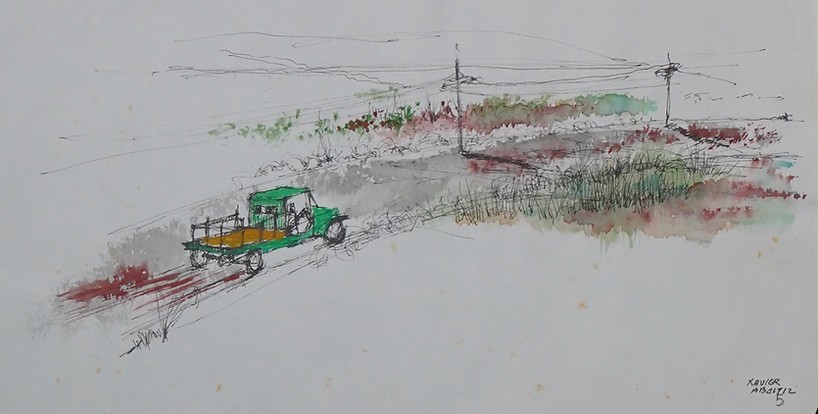
Painting by Xabi Aboitiz
The truck was assembled. I still remember Ramon Zabaleta’s right-hand man, Paolo was his name, tall guy, lanky fellow, and Txabi Zabaleta told me they had managed to get a contact in San Fernando, Pampanga, and that Juanito and I should go with Braulio up to San Fernando because this contact in San Fernando had all kinds of goods. Braulio, Juanito Ugarte and I, helped to put the stuff in the truck. I guess the gasoline was acquired somehow from Sebastian and we drove out to San Fernando from San Juan.
We got to San Fernando late in the evening and the guy had a bunch of food, stuff that we hadn’t seen like eggs and shrimp and rice. I still remember I had a great, big, huge shrimp omelette. It was huge. And we slept upstairs in this house while there was a bar going downstairs below the house. There were U.S. troops in there.
The next day, we started to load up the truck. It was flat bed truck. It was green colored, the cab – the sides were open. It was a pre-war truck. And we got some rope and we tied the sacks of rice down and we drove off to San Juan. We got there in the evening, part of the food was distributed between the Zabaleta and the Ugarte families.
My mother was under the care of the Ugartes. That was it. Thank God the Ugartes were always very generous with their time, with their efforts, and primarily, they gave us a sense of security.
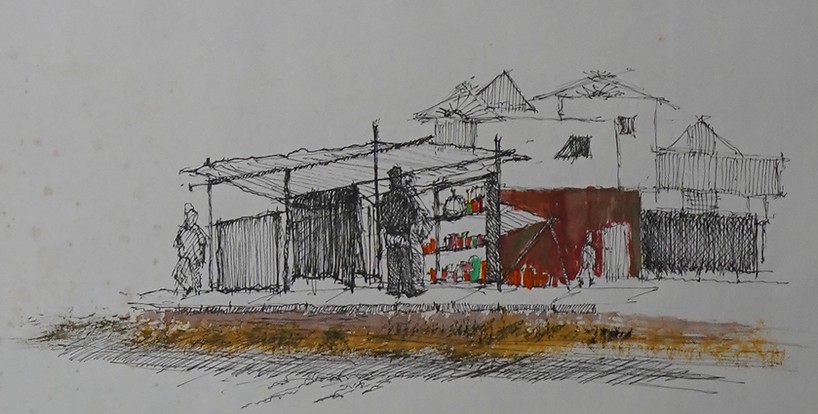
Painting by Xabi Aboitiz
A couple of days after, Ramon Zabaleta said that they were going to open up a little store in the Azcarraga. I remember we got to the Azcarraga. I didn’t go by truck. Actually, I remember walking there and it was Jon Zabaleta, myself, and Juanito Ugarte came, too. We got to the Azcarraga and Ramon Zabaleta was there. We started to get some burnt galvanized roofing and we made like a lean-to. Jose Mari Zabaleta had some shelves and things and they lined up the commodities that we had gotten from San Fernando and all that consisted of was just like some rice, salt, and these very crude bars of soap, laundry soap. We stayed there till very late at night then we walked back to San Juan. It was no big deal in those days. I wouldn’t want to walk it now.
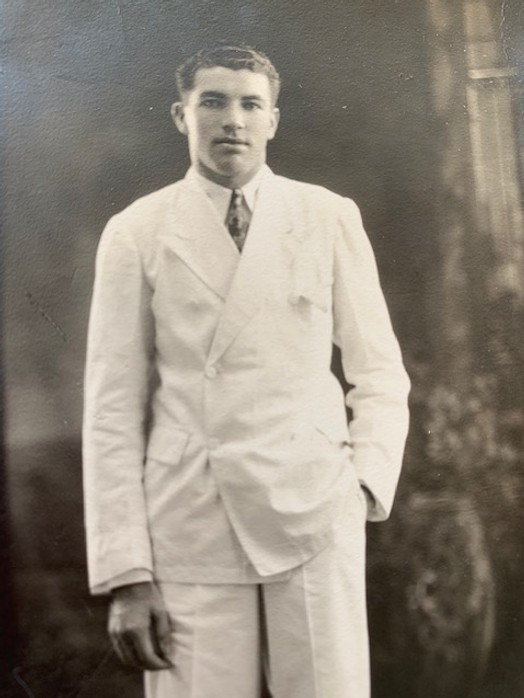
Mariano Gonzalez
What I am trying to say is that that was the beginning of Aboitiz and Company in Manila, as far as I know. And of course, that required some cash so after a short while, Mariano Gonzalez acquired some of that cash and these were already Philippine pesos, which was a great turnover. Japanese money didn’t exist anymore. The occupying forces discarded it.
We stayed in San Juan and I remember going to Azcarraga maybe once or twice more because, essentially, the Zabaletas and the others were already doing the business. We got ready to go back, my mother decided to go back to the States. Since she was the only U.S. citizen, she had the right to go to the States with her dependents, her children. We were not U.S. citizens but we were dependents of my mother and we got on the SS Monterey on a 28-day voyage to San Francisco. We arrived there May 28, which is essentially fifty years to the day (1995) , more or less.
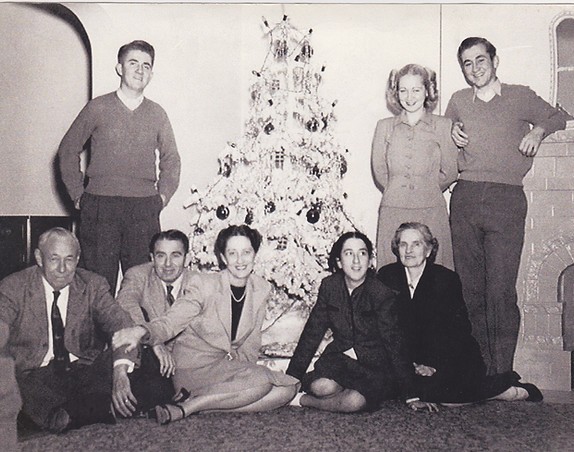
Seated: Juan Ugarte, Luis Aboitiz, Clemencia Aboitiz, Tona Ortiz, Dolores Ugarte
Standing: Mike Aboitiz, Teresita Carcovich, Xabi Aboitiz
I am fortunate there is Aboitiz and Company. I am fortunate that there is a strong family. The best that I can say is that I was a lucky person. I was born like at the tail of a comet that came down and I was born who I am as a member of a very nice family. And that includes just about everybody I know. I’m sure they all had their faults. But I can truthfully say that family is very important. I survived the war because of family. And that was a true test. The Ugartes were very helpful during the war. Tio Ramon and Tio Vidal and, of course, the women they had married were very powerful people in my life.
Comments
